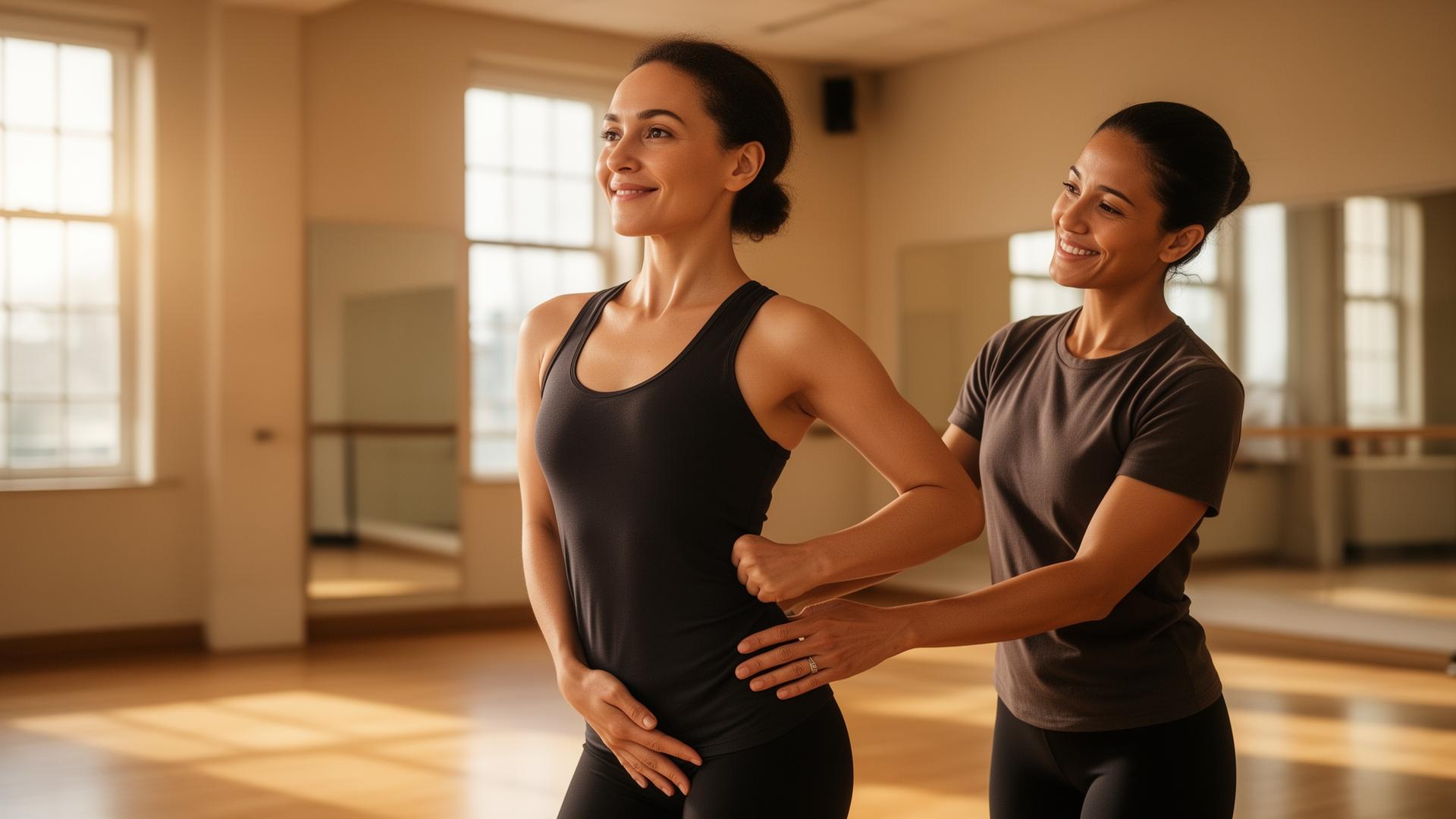
A beginner-friendly guide to dancing without feeling awkward. Learn simple steps, relaxed movement, and rhythm tips that help you feel natural on any dance floor.
If you've ever stood on a dance floor and thought:
"I feel awkward."
"Everyone looks smoother than I do."
"I don't know what to do with my arms."
"My body won't move the way I want it to."
…you're not alone.
Feeling awkward is the most common experience adults have when they start dancing — especially if you weren't raised dancing socially.
The good news?
Awkwardness isn't a permanent condition.
It's just a sign your body needs simple patterns, clear rhythm, and movement that feels natural rather than forced.
This guide will help you dance with ease, comfort, and flow — no matter your experience level.
🌱 Why Dancing Feels Awkward in the First Place
Awkwardness comes from:
- overthinking
- trying to copy other dancers
- stiff posture
- tight shoulders
- not feeling the beat
- worrying about what others think
But here's the truth:
People are too busy dancing, drinking, celebrating, and living their own lives to analyze you.
And most adults feel exactly like you do — they're just pretending they don't.
Your goal isn't to dance "perfectly."
Your goal is to move in a way that feels steady and natural.
🎶 Tip 1 — Start With the Beat, Not the Moves
Beginners often focus on choreography.
But real dancing starts with one simple action:
👉 Shift your weight on the beat.
Try this:
- Stand relaxed
- Shift weight left → right → left → right
- Match the rhythm of the music
- Breathe
This alone removes 80% of awkwardness because your movement is instantly in sync with the song.
🧘♂️ Tip 2 — Unlock Your Knees and Shoulders
Most awkward movement comes from tension.
Keep these relaxed:
- knees
- shoulders
- ribs
- hands
- jaw
Think "soft joints, easy body."
When your body loosens, your movement flows.
💃 Tip 3 — Keep Your Steps Small
Beginners often take big steps, which makes movement feel:
- clunky
- forced
- unbalanced
Small steps = smoother dancing.
Try this rule:
👉 Move no more than 2–3 inches per step.
Everything feels more natural instantly.
🙌 Tip 4 — Use the 'Natural Arms' Rule
The BIGGEST source of awkwardness is arms.
Beginners freeze them, flap them, or overuse them.
Instead, use this simple rule:
👉 Your arms follow your body.
Not the other way around.
If your torso sways gently, your arms will naturally follow.
No choreography needed.
👀 Tip 5 — Stop Looking at Your Feet
Your feet know where they are.
Your brain doesn't need to supervise them.
When you look down:
- your posture collapses
- your movement stiffens
- your balance gets shaky
- you look more awkward
Instead, lift your gaze:
- look around the room
- look at your partner
- look above the crowd
Movement becomes smoother immediately.
💡 Tip 6 — Master One Simple "Go-To" Move
Every dancer has a fallback move that ALWAYS works, no matter the song.
Here's yours:
The Wedding Two-Step Weight Shift
- Step side
- Bring feet together
- Step side
- Bring feet together
- Optional gentle sway
This fits:
- pop
- R&B
- hip-hop
- wedding music
- 80s
- funk
- disco
- slow songs
When in doubt, do this. No one questions it.
🎵 Tip 7 — Choose Beginner-Friendly Songs
Don't practice with fast or complex music.
Best practice genres:
- slow pop
- acoustic
- 80s classics
- soft rock
- light Latin
- simple EDM
These songs give your body space to find rhythm without pressure.
🧍♀️ Tip 8 — Give Your Body a Comfortable Shape
Awkwardness shows up when your body feels "undefined."
Create a gentle structure:
- stand tall
- soften your ribs
- keep hands relaxed
- maintain a natural sway
This gives your body a pattern to follow so movement feels intentional, not random.
😄 Tip 9 — Let Your Face Relax (Seriously)
Your facial expression affects your entire body.
If you're tense in your face, you're tense everywhere.
Use a small smile or soft expression — it signals your body to relax.
🪩 Tip 10 — Remember: Dancing Isn't Performance, It's Participation
You're not being judged.
You're not being graded.
You're simply joining the rhythm of the room.
Awkwardness fades when you stop chasing "right" and start chasing "present."
⭐ Want Help Feeling Natural on the Dance Floor?
If dancing feels stiff or overwhelming and you want movement to feel effortless and grounded, my private lessons and Dance Experiences (2 one-hour classes) are designed for adults who want to feel:
- at ease in their body
- relaxed in social settings
- steady on the beat
- ready for bars, weddings, dates, and nightlife
- able to move without overthinking
The steps are simple, the space is judgment-free, and everything is taught at your pace.
📦 Ready to Keep Dancing?
After your Experience (2 one-hour classes), many dancers choose to continue with a Lesson Package:
- 4-Lesson Package ($328) — $82/lesson, valid for 2 months
- 8-Lesson Package ($616) — $77/lesson, valid for 2 months
These private sessions give you deeper skill development, priority scheduling, and the momentum to truly transform your dancing.
Frequently Asked Questions
Why do I feel awkward when I dance?
Feeling awkward usually comes from not knowing what to do with your body combined with self-consciousness. Once you learn some actual moves and practice them, your brain stops overthinking and movement becomes natural.
How can I stop being self-conscious on the dance floor?
Focus outward instead of inward. Pay attention to the music, your partner, or the environment rather than worrying about how you look. Having reliable moves you can execute confidently also eliminates the uncertainty that causes self-consciousness.
Can someone with no rhythm learn to dance?
Absolutely. Rhythm is a skill that develops with practice. Private lessons break down the music so you learn to hear and feel the beat. Read our guide on how to find the beat in music.
How do I build confidence for dancing at social events?
Confidence comes from competence. Private lessons give you real skills in a supportive environment so when you get to a social situation, you already know what to do. Practice in private builds confidence for public dancing.